Polar Brief · AI-assisted client briefs
I took a design problem all the way to a working product.
How I used AI tools to move beyond the handoff—without leaving product design behind.
Role
Product strategy - UX & interaction - AI-assisted prototyping
Duration
Apr–Jul 2026 · Iterative build
Tools


The Problem
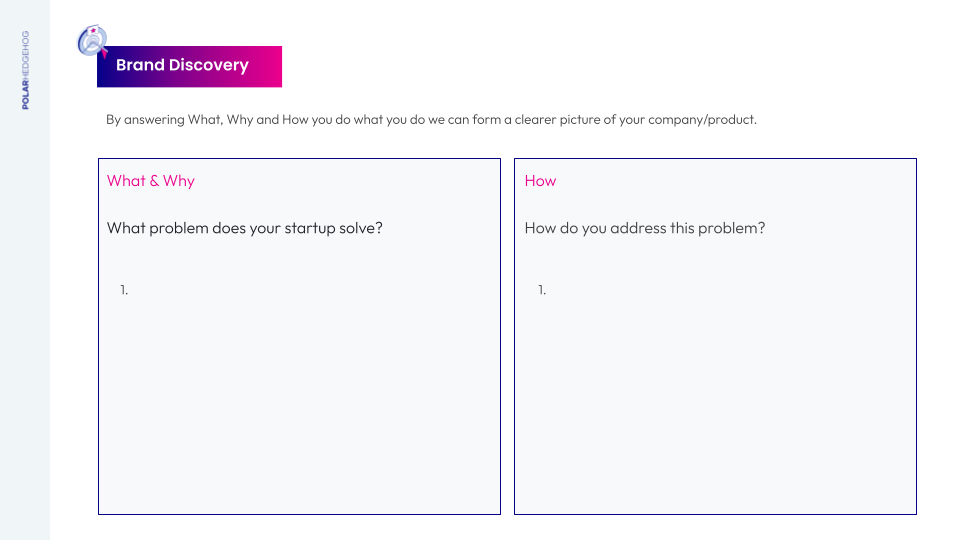
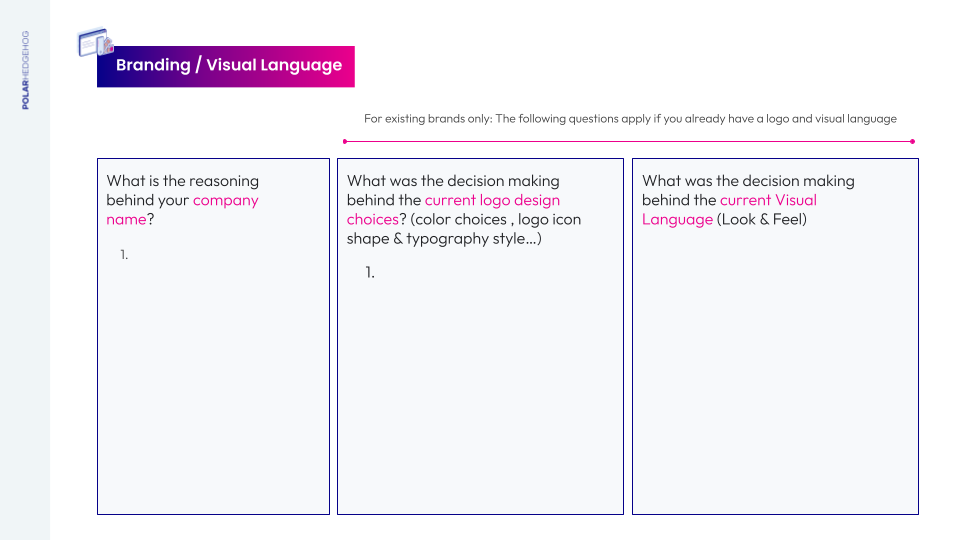
Every Polar Hedgehog project starts with a client brief. Ours was a dense spreadsheet and thirteen-slide questionnaire sent to founders who had never articulated their brand before. Questions were skipped, answers were thin, and kickoff calls repeated the same discovery.
Opportunities
I mapped the service, wrote the PRD, and defined the experience as I normally would. Instead of handing it off, I used AI tools to turn small decisions into working screens I could review, question, and improve.
01
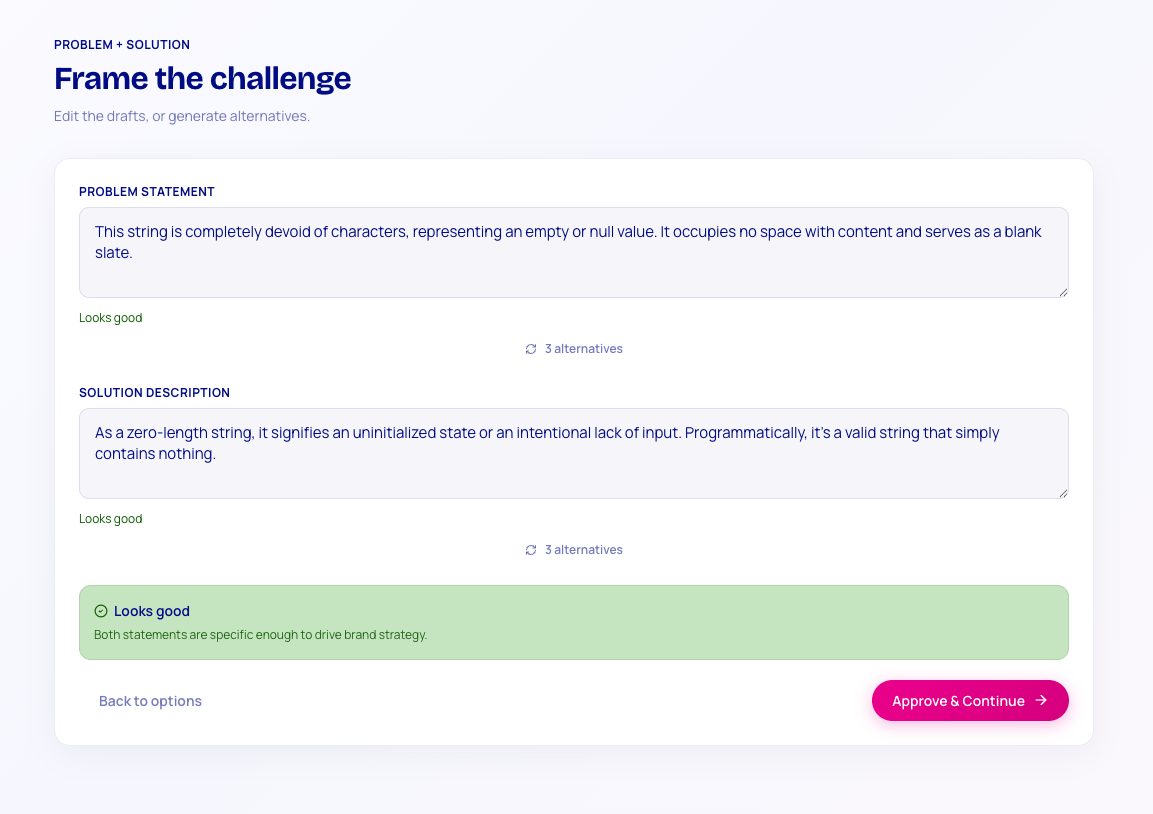
AI proposes. People decide.
The draft-and-review pattern held up. AI could remove the blank page, but keeping every answer editable, regeneratable, and approvable preserved the client’s judgment.
02
Show, don’t ask.
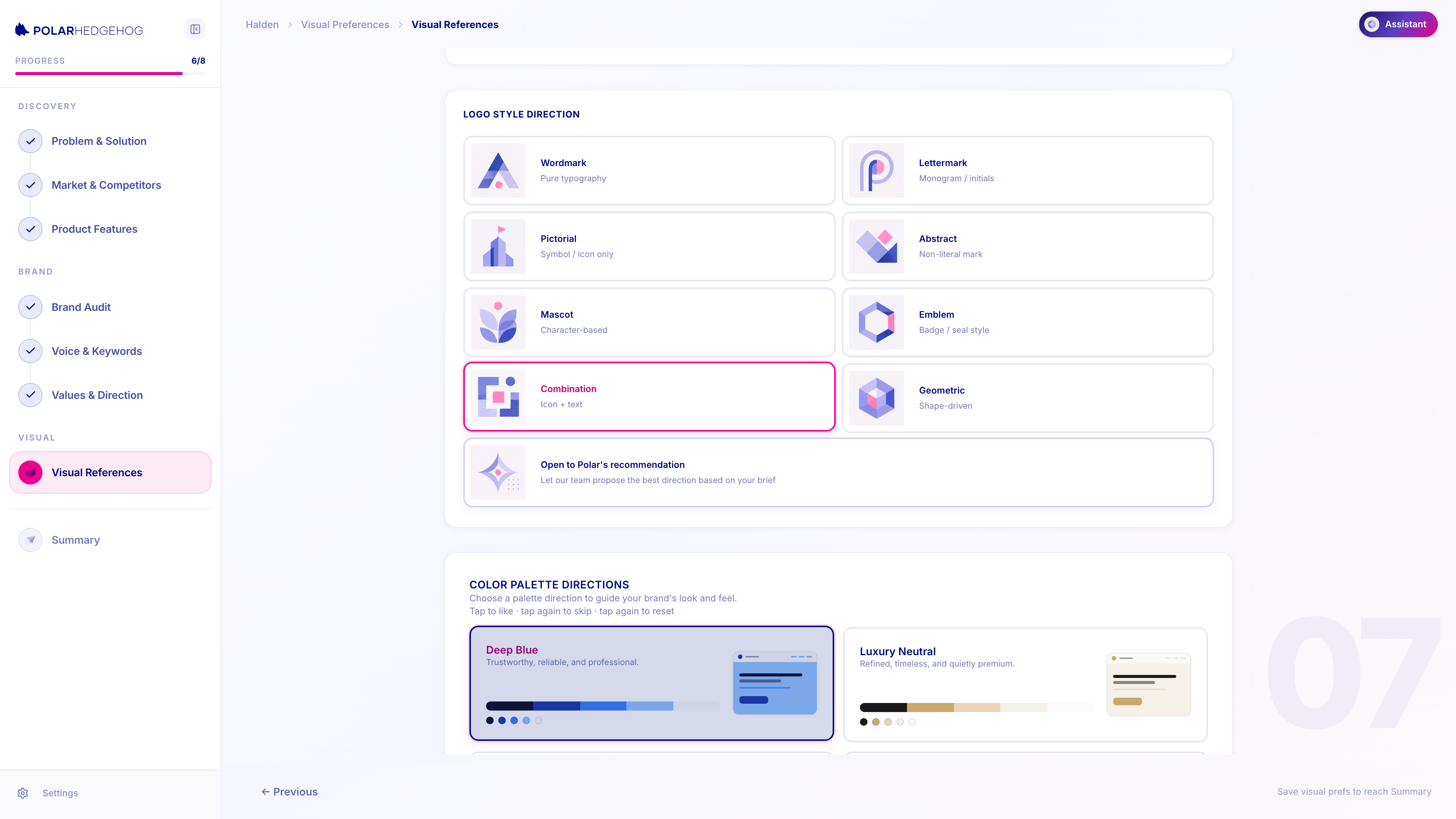
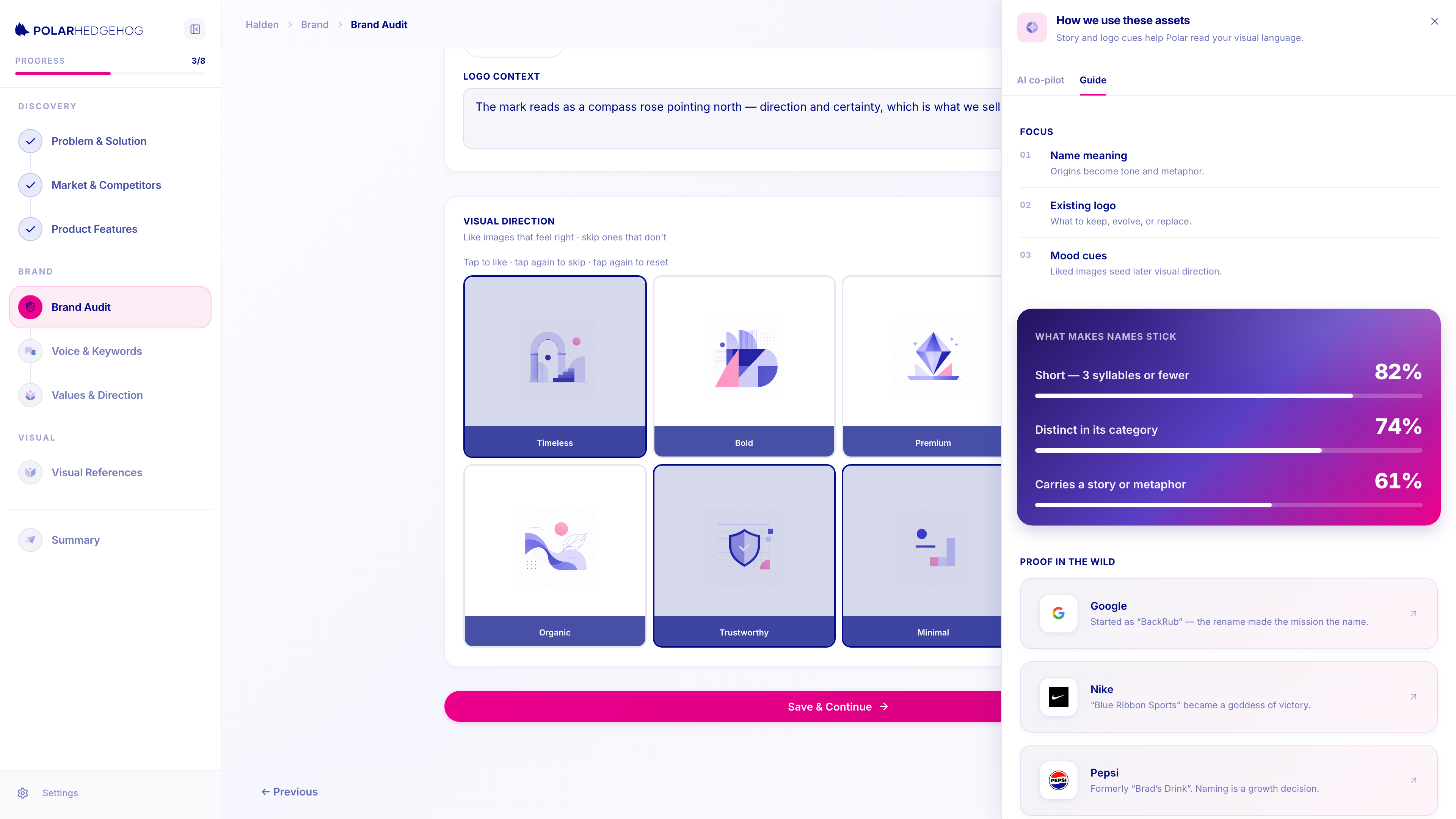
Abstract style questions still felt like homework. Visual references gave clients something concrete to react to and gave the studio clearer evidence behind each choice.
03
Fewer steps, richer decisions.
Clicking through all nineteen steps made the fatigue obvious. I merged related questions into nine coached moments.
My part

I guided the product, not the code.
AI tools translated my decisions into a working experience. I framed the problem, designed the interactions, reviewed every result in the browser, and kept refining until the full journey held together.

The brief is supported by a small team of specialists.
I avoided asking one all-knowing AI to do everything. Each service has one focused role, and they share context through the same brief. The client still decides what reaches the final output.
Supporting agents
and services.

Gemini
Turns evidence into a first draft.
Reads whatever evidence client gives (uploaded docs, images, scanned URL) and writes first-draft brief content: problem statements, UVPs, features, brand messages. Client never sees blank fields, only editable drafts with regenerate/apply controls, dimmed until touched.

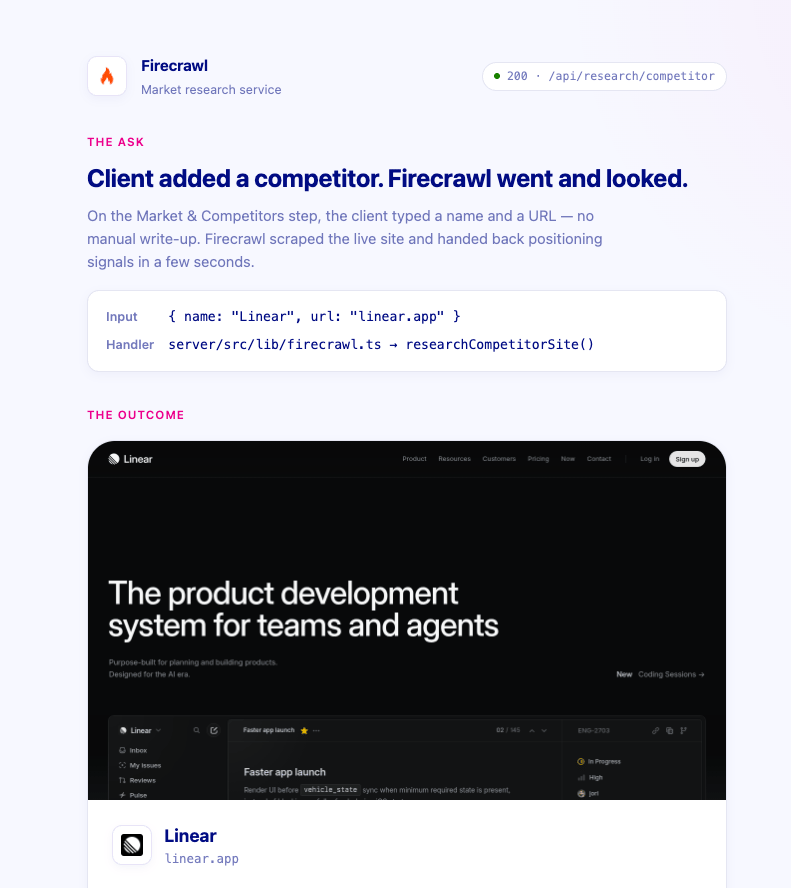
Delivers live market updates.
Scrapes live competitor sites on demand, pulls tagline, summary, competitive observations, and a screenshot via structured extraction. Feeds the Market & Competitors step real current data instead of client-typed guesses.

Refero
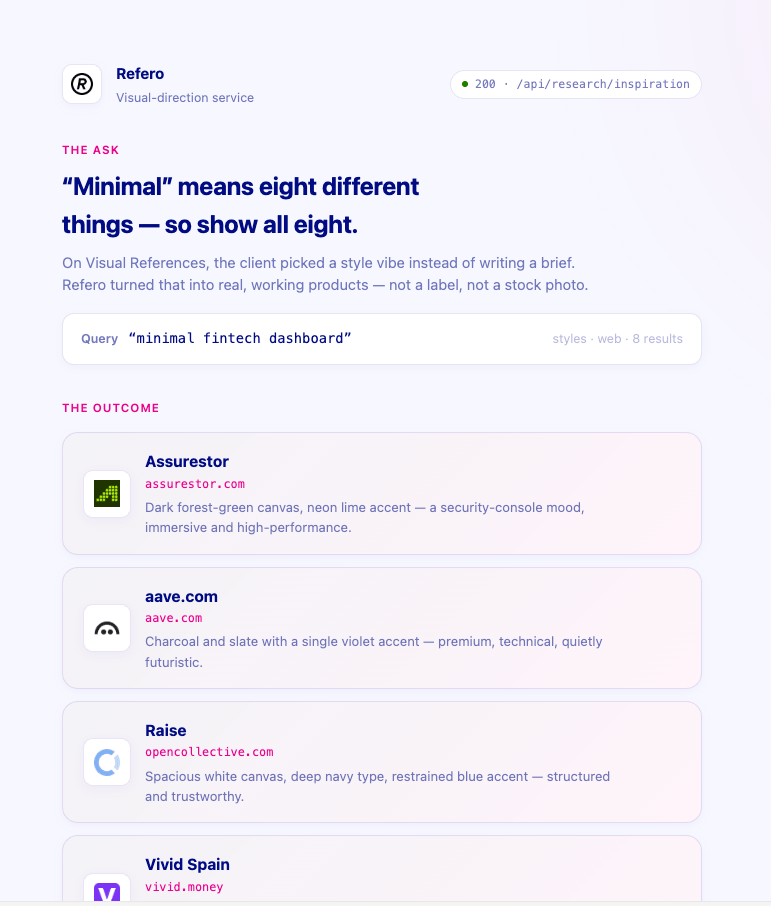
Makes visual direction concrete.
Turns fuzzy style words ("bold", "premium", "minimal") into real design references — actual app screens and style boards pulled from Refero's library. Client reacts to concrete examples in the mood board instead of interpreting an adjective.
Each service was followed by a package of skills which refined the task of search.
I avoided asking one all-knowing AI to do everything. Each service has one focused role, and they share context through the same brief. The client still decides what reaches the final output.
The product

AI writes first. Client decides.
Studio gets direction.
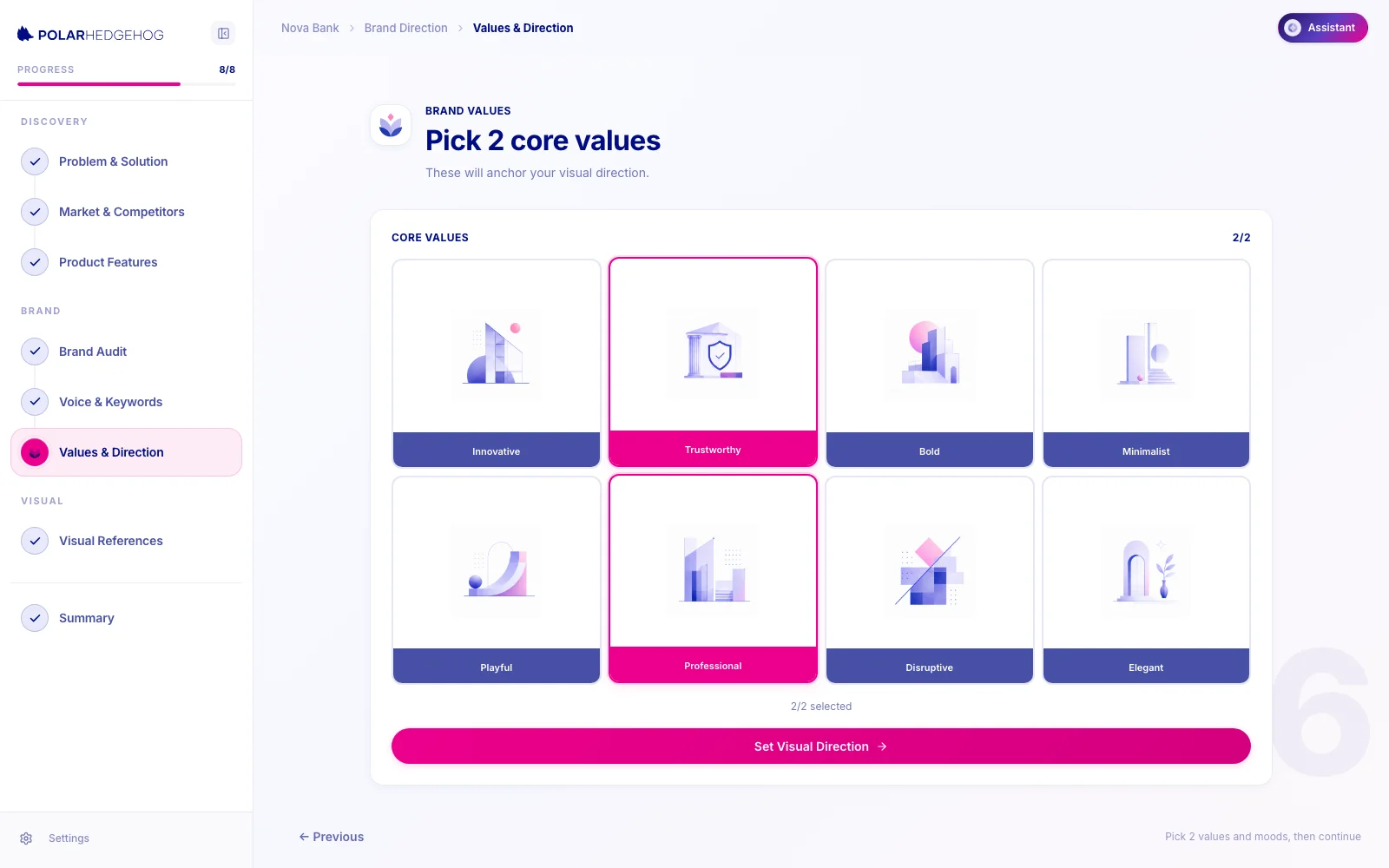
That is the product in three moves. The demo below uses Nova Bank, a fictional but realistic client package, run through the actual application.
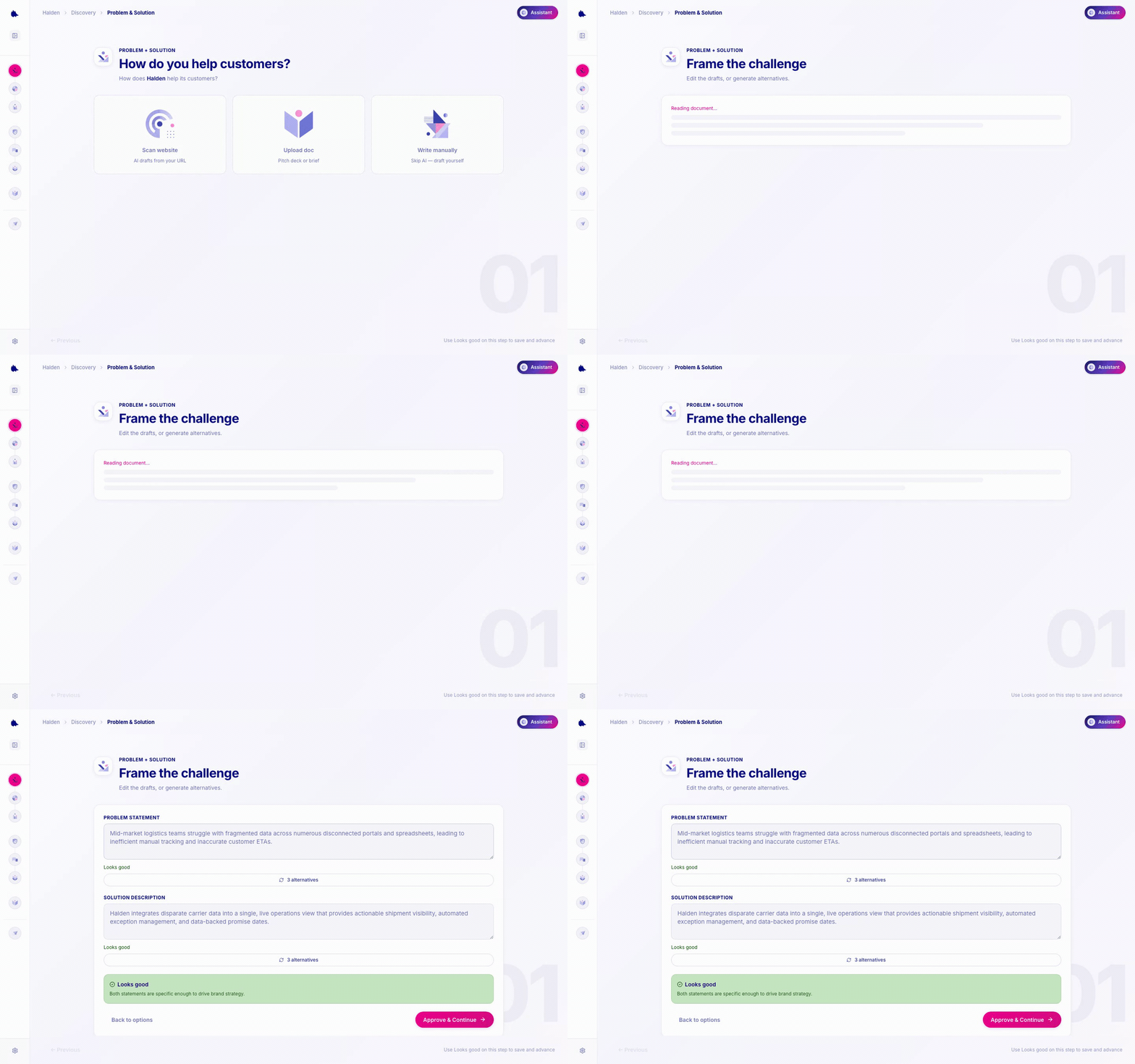
Start from evidence
Upload a deck or scan a website. Gemini proposes editable statements before the client faces a blank field.
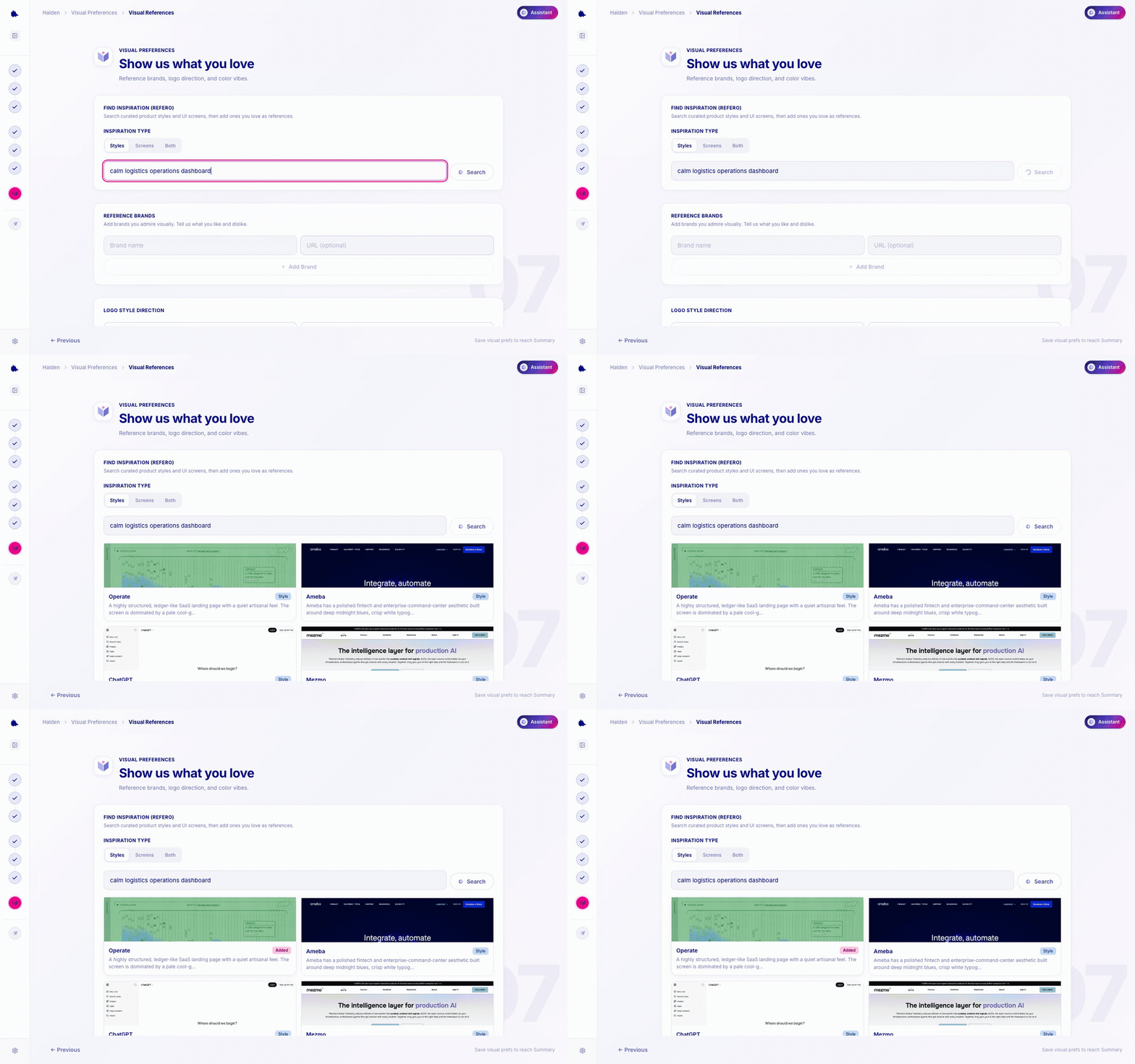
Make choices concrete
Live competitor research and curated references turn abstract opinions into comparable evidence.
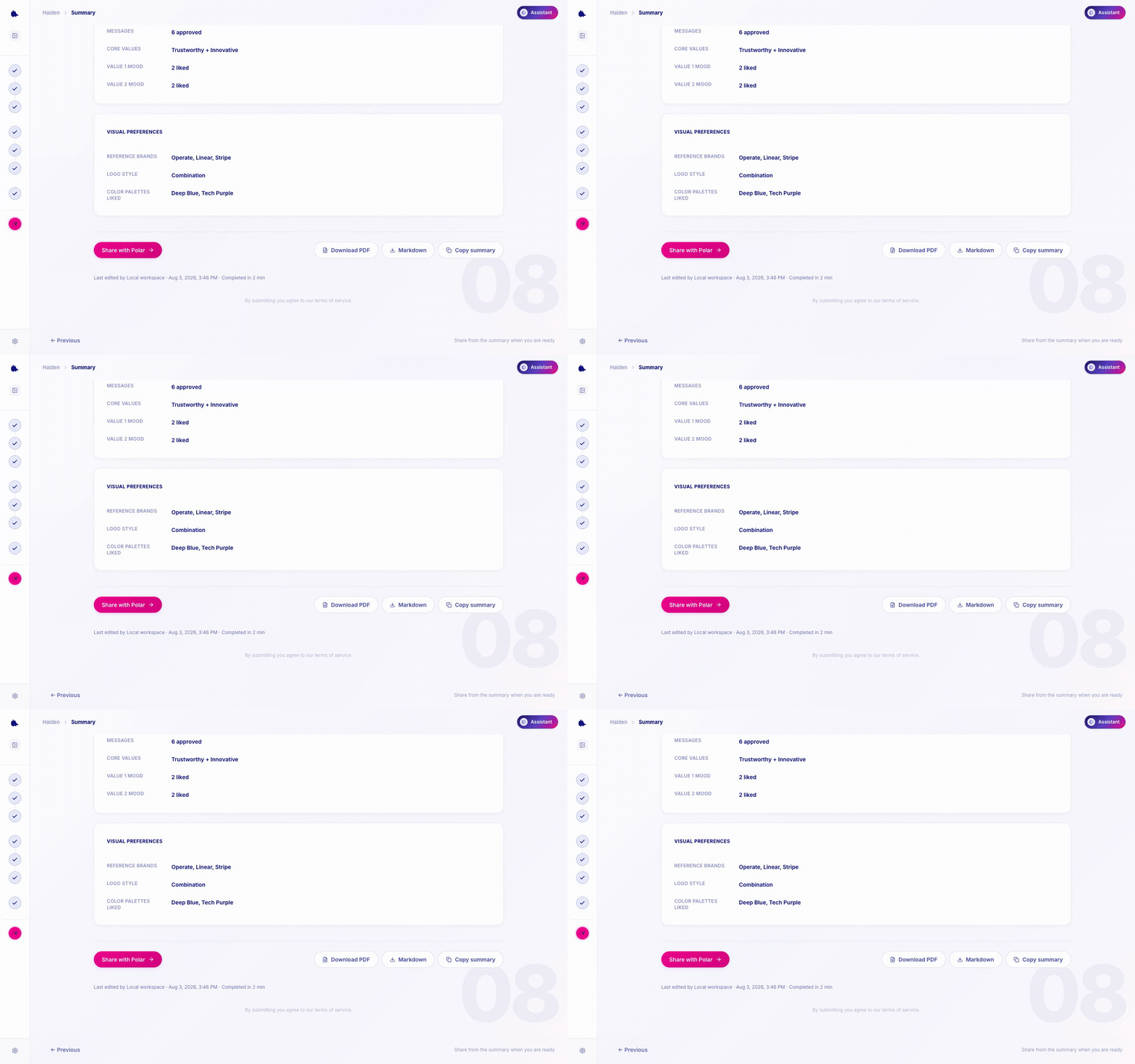
Hand off a direction board
Approved messages, values, palette, and references become a structured brief the studio can use.
Outcome
A working product - and a wider version of my role.
Polar Brief turns scattered client material into a structured direction board. For me, it proved that product strategy, UX, writing, visual judgment, and AI tools could become one continuous act of making.